Creating systems that make emotional well-being a shared and achievable goal!
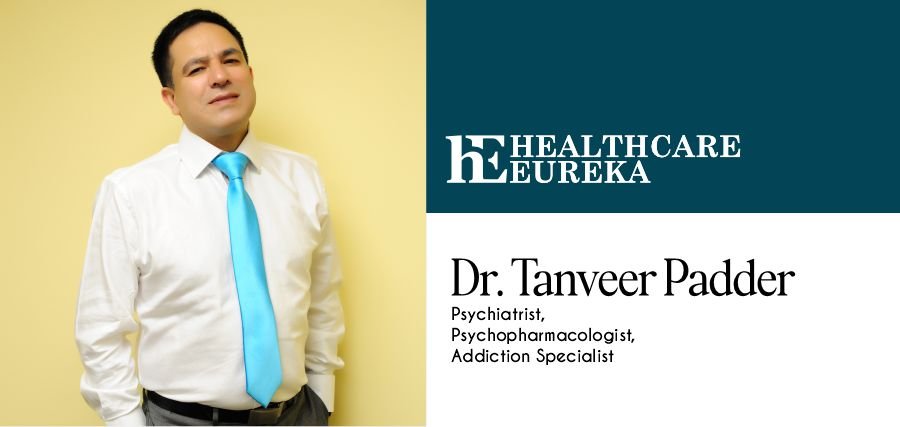
Some lessons are learned in classrooms, while others take root at home. For Dr. Tanveer Padder, the foundation of his calling was built on the strength of his mother, a woman who never attended school but raised 6 physicians. Growing up in Kashmir, he saw that true education begins with values, and that service to others is the highest form of knowledge.
That early influence formed how he viewed medicine, not as a symbol of prestige but as a mission to restore dignity and hope. His white coat became more than a professional identity; it became a reminder of purpose. While training in emergency rooms, community clinics, and rehabilitation centers, Dr. Tanveer began to see a deeper truth about healing. People needed more than prescriptions. They needed understanding, accessibility, and care that respected the realities of their lives.
This realization drew him toward psychiatry, a field where science meets humanity and empathy becomes a vital component of medicine. It was here that Dr. Tanveer found his true path, bridging the gap between mental health systems and the people who depend on them. His vision has always been clear: to create structures that make timely, effective mental health care available for all.
Over the years, his work has carried that same thread of purpose that began in his childhood home. Whether guiding patients through their darkest moments or shaping systems that reach underserved communities, he persists in embodying the lesson his mother taught by example: that compassion can heal where medicine alone cannot.
Through his journey, Dr. Tanveer teaches the world that the heart of medicine lies in service and that the truest form of healing begins with humanity itself.
Let us learn more about his journey:
In psychiatry, listening is the first intervention. During his first inpatient rotation, Dr. Tanveer observed how words, empathy, and structure could defuse storms that no scalpel could touch. A patient in acute psychosis calmed when the team slowed down and reflected back his fears. A mother with severe depression took her first hopeful breath when neurochemistry was translated into human terms she could understand.
These encounters taught him two lessons that have remained central to his practice: the therapeutic alliance serves as a clinical instrument, and healing accelerates when precision is matched with presence. This insight has guided his career, driving his commitment to making precision psychiatry measurable, compassionate, and scalable, available in real time, in the places where patients actually live.
It was never about collecting titles. It was about responsibility to patients with complex lives. General psychiatry trained him to recognize patterns across the lifespan. Addiction medicine taught him how biology, behavior, and environment braid together. Clinical psychopharmacology gave him the tools to tailor treatment at the molecular level.
What he sought was integration. A diagnosis is a story told in both neurobiology and narrative. His approach is to honor both, bringing evidence, empathy, and ethics to every decision, from which medication to start to how to structure a clinic, a follow-up protocol, or an entire program.
Science refines precision; empathy defines direction. A medication might rebalance neurotransmitters, but empathy restores trust, hope, and adherence. Every time Dr. Tanveer prescribes, he reminds himself he is simply adjusting serotonin or dopamine; he is helping someone sleep through the night, return to school, show up for their children, or reclaim a sense of self.
That balance is baked into the technology he uses. Decision-support captures data, drug interactions, and safety checks so that the clinician’s attention can return to the person. Algorithms can highlight options; only a human can sit in silence, ask the extra question, or notice the tremor in someone’s voice that tells them they are not ready, yet.
The first time a patient responded to an antidepressant chosen specifically because their inflammatory markers were elevated, Dr. Tanveer realized the research had crossed a threshold. For decades, depression has been treated as a single entity; in reality, it is a family of syndromes with biological subtypes. When CRP and IL-6 were linked to treatment resistance and agents were selected accordingly, outcomes shifted. It was not magic; it was categorizing what had previously been lumped together.
That mindset, from trial and error to test and tailor, now reaches across Dr. Tanveer’s work, from cytokine-informed strategies to exploring trace-amine, modulating antipsychotics, and digital phenotyping. The message is consistent: if what matters is measured and the feedback loop is closed, patients spend less time suffering and more time living.
Dr. Tanveer believes that every prescription is a moral decision as well as a clinical one. The objective extends beyond symptom reduction at any cost. It focuses on restoring quality of life without exchanging one form of suffering for another. Risk is personalized before the dose is personalized.
This approach involves pharmacogenetic testing to understand metabolism, using biomarkers to gauge inflammation, and structured monitoring for metabolic changes, QTc, prolactin, and movement disorders. Patients are taught to report side effects early, with no shame and no minimization. Safety represents empathy translated into structure, through standardized follow-ups, clear red-flag protocols, and smart alerts that catch trouble when it remains small.
Where evidence meets empathy. Medication can stabilize the brain; therapy rebuilds the person. The strongest outcomes happen when both work in harmony, when a patient sleeping through the night is better able to engage in trauma-focused therapy, or when CBT reduces avoidance so medication can work at a lower, safer dose.
Dr. Tanveer describes it as a duet. Biology sets the key; relationship carries the melody. When hope returns, therapy deepens, and medication works better. That represents psychiatry at its best: biological correction and human connection, healing mind and spirit together.
Technology in mental health care strengthens the therapeutic bond. AI and wearable devices allow the tracking of sleep, heart-rate variability, and mood patterns, providing a more accurate picture of a person’s week than a brief self-report. The purpose of these tools is understanding, not creating distance.
In practice, these signals allow earlier intervention: a dip in sleep efficiency, a surge in restlessness, or changing speech cadence can prompt a check-in before a crisis escalates. Systems are designed with guardrails, human oversight, privacy by default, bias monitoring, so the clinician remains the final common pathway. The goal is simple: more timely help, less guesswork, and a relationship that remains unmistakably human.
Resilience is often quiet and steady. It appears in the patient who returns after a relapse, the parent who chooses treatment again, and the family that learns forgiveness in small steps. While the biology of addiction receives treatment, healing unfolds through relationships and consistency over time.
This perspective guided the development of Buprenorphine-Plus™, a protocol that integrates medication-assisted treatment with weekly CBT, family sessions, contingency management, and a secure app for mood tracking and direct messaging. Within this program, relapse rates have dropped and emergency-room visits have declined. The most powerful change extends beyond numbers; it is reflected in the language patients use about themselves. One patient shared, “I feel human again.” This captures recovery as a process that transcends sobriety.
Knowledge without empathy remains incomplete medicine. Psychopharmacology can become highly technical, encompassing receptors, plasma levels, and adverse-event profiles, while patients experience care through their goals and relationships. In the 360° Psychopharmacology Mastery Program, Dr. Tanveer teaches both evidence-based prescribing and the skills that sustain the therapeutic alliance: how to sit with silence, deliver difficult news, explain risk in clear language, and restore trust after a side effect.
The program also emphasizes safety leadership, focusing on workflows for monitoring, verifying diagnoses with rating scales, standardizing documentation, and recognizing when to escalate care. Compassion is presented as a clinical competency that strengthens outcomes and reduces burnout.
Dr. Tanveer is grateful for every honor, but the ones that matter most affirm real-world impact, like being named among the “Most Impactful Psychiatry Leaders,” or hearing that a lesson from one of his courses helped a clinician prevent a tragedy. Awards bring visibility; visibility brings responsibility. The most meaningful feedback is the quiet note from a provider who says, “Your approach helped me keep my patient safe.”
Innovation in psychedelic-assisted therapy remains firmly rooted in responsibility. The approach shows potential, particularly for individuals with treatment-resistant depression and PTSD, yet enthusiasm always aligns with evidence and ethical standards. Patients undergo careful screening, including cardiovascular risk assessments and evaluation for psychosis spectrum or mania history. Structured preparation, guided integration, and rigorous monitoring are central to the process.
In ketamine therapy, clear protocols guide dosage, frequency, bladder health, dissociation, and mood monitoring, all conducted within the framework of psychotherapy. For investigational agents such as psilocybin, participation occurs through ethical research frameworks. The goal is not novelty but the responsible expansion of therapeutic options for those who require them most.
Access, precision, and compassion come together in Dr. Tanveer Padder’s approach to mental health care. His ambition is to make psychiatry faster, safer, and more equitable, eliminating months-long waits, avoiding isolated decision-making, and ensuring every choice is guided by both science and empathy. He has built systems where artificial intelligence enhances clinical judgment, biomarkers inform treatment decisions, wearables extend care between visits, and training programs equip teams to deliver advanced care in underserved areas.
His hope is simple: a psychiatry that listens deeply, treats wisely, and spreads compassion widely. If this vision becomes his legacy, the work will have been well spent.
Dr. Padder’s career is best understood through the systems he has designed and led.
The next phase focuses on multilingual, offline-capable mental health platforms paired with community academies to train local providers in culturally informed care. Integrated wearables will predict relapse risk and prompt proactive outreach. Technology serves to amplify empathy, never to replace it.
Despite the technology he’s helped build, the trials he’s led, and the programs he’s launched, Dr. Tanveer A. Padder returns, again and again, to something disarmingly simple: “All the algorithms and diagnostics in the world can’t replace the feeling of being truly heard. Behind every data point is a person who deserves hope.”
Medical Director, Coral Shores Behavioral Health
Medical Director, TIME Organization, Inc. (Baltimore, MD)
Chief Psychiatrist, MTP Psychiatry LLC
Author, Practical Guide to Psychiatric Medications
Founder, KetamineOnline.us
Founder, OnDemandPsych™ — AI Co-Pilot for Psychiatry
Founder, 360° Psychopharmacology Mastery Program
Baltimore, Maryland | Palm Beach, Florida
📧 Email: ceo@mtppsychiatry.com
🐦 Twitter: @drtpadder
💼 LinkedIn: @drtpadder
Learn more about Dr. Padder’s work in advancing psychiatry and mental health innovation at psychnptraining.com | mtppsychiatry.com | ketamineonline.us | ondemandpsych.com
Read Also – CSL Behring: Leading Innovation & Impact in the Healthcare Landscape